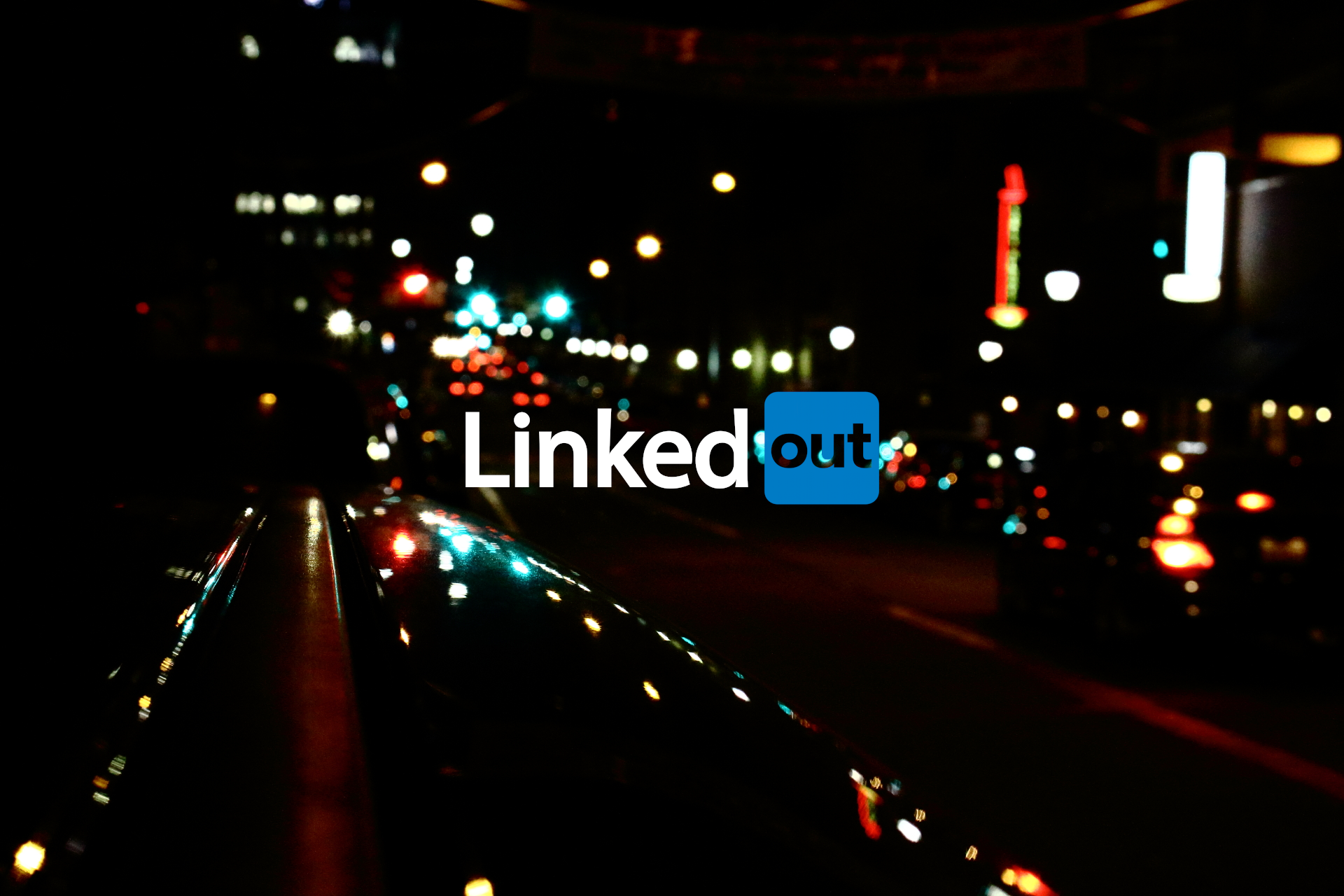
LinkedOut of Reality
Believe it or not, there was a time when punching in and punching out was enough. In the decades spanning the post-war boom to the tail end of the twentieth century, America operated as a different kind of industrial superpower. It was an era draped in rigid corporate ladders, sure, but it was also defined by a sacred boundary: when you punched out, the job stayed at the desk.
Work funded your life. It didn’t consume it.
Many people, myself included, experience work as a means to an end. It helps when you love what you do and who you do it for; nevertheless, humans don’t seem to have been designed for the corporate world. We trade our time, our youth, our lives for currency that, for most, is only a means to continue the cycle of corporate cooperation.
Before social media and the internet, people used work as a sort of escape. Not from the family they love dearly—of course. It was a temporary escape from Keeping Up with the Joneses while tirelessly working to fund it. There were certain benefits to such a way of life. Work felt like something you owned rather than something that owned you.
If you could survive and flourish from your paycheck, did work feel more like a hobby that happened to also print money for extracurriculars? Sure, most work in this era was extremely dangerous, but at least you could afford the medical bills.
Americans today are concerned with keeping the lights on or making sure they can provide the next meal for their family. It’s a quiet struggle—one that goes unnoticed, or worse, is shamed by those fortunate enough to view that reality as foreign.
On top of all the persistent chaos we endure daily, we were lucky enough to be graced by the creation of LinkedIn. A social media platform built for the modern professional. Competing with a global audience across Instagram, TikTok, Facebook, and Twitter wasn’t enough—we needed corporate influencers.
It’s a quiet struggle—one that goes unnoticed, or worse, is shamed by those fortunate enough to view that reality as foreign.
What exactly is a corporate influencer, and who are they really? I ask this not out of sarcasm or a desire to belittle, but out of genuine inquiry. The question needs to be asked because social media already does a thorough job of masking identity. The filters they add, the curation they crave, the lengths they go for “perfection.” It’s a highlight reel, and we all know it.
LinkedIn adds a different kind of filter, one more interesting when you sit with it. While life was good back in the “Golden Age of Capitalism” corporate life was still as it is today: a strict set of rules and a specific culture—a “family.” You were expected to present yourself in a certain way, censor yourself, and act in the best interests of the company. Today those expectations persist—even as they’re dissolving into humanity’s modern craving for authenticity amongst the highlights.
The tension between those two things is where LinkedIn was born—and where it gets odd.
Such an environment has produced a subset of society that is LinkedIn to the corporate world and LinkedOut of reality. People posting AI-generated motivational prophecy, hollow caricatures, and personal images carefully staged to gain the next client. Some content even introduces a significant other, quite randomly and without substance, just to ensure their point lands with those who are easy to nab.
It’s questionable performance dressed as personality, and the seams are showing.
It’s important to recognize these people aren’t bad. But they’re certainly disconnected from reality, and they’re not alone. With war raging, gas prices soaring, and a society untrusting of everything and everyone, we’re surrounded by highlights and instant news cycles—ruled by expectations and stuck in a cyclical loop of confusion.
Economic anxiety isn’t just something felt, it’s something people are actively fighting against. Corporate influencers view LinkedIn as a way to expand their network; in turn, they hope for prosperity that may never come. They sign away bits of authenticity not because they want to, but because the system gave them no other choice.
I’m no exception—affected by the same economic conditions, stuck in the same loop—which is why I find this all particularly interesting. It’s easy to see what they’re doing because it’s what we’re all doing: trying to stand out.
Such an environment has produced a subset of society that is LinkedIn to the corporate world and LinkedOut of reality.
What if standing out really meant being yourself? Dropping the filters, the rigid expectations, and the insistence that everything be perfect. Instead of posting about who you think you should be—you start becoming you. This isn’t a revolutionary idea. It just feels like one because it’s being actively suppressed by volume to the contrary.
I’m not some executive or corporate hero. But in my dealings with executives and other leaders, I’ve noticed they appreciate brevity. A drop of the mask in lieu of a message that cuts to the point. Attribute most of that to time constraints, sure—but think of what it takes to climb any ladder in a societal structure, never mind the modern corporate one. Once you reach a certain point of “success” it must feel like you’re a runner finishing a marathon begging for a simple glass of water. We see this constantly from the oligarchy class or the famous who tell us they wish they had our shoes.
Maybe the real prize isn’t another polished post but instead showing up as the same person you are at the dinner table or the bar on a Friday night. No script or filter, just the real you. The you who’s tired some days, worried about bills, and stumbling through life—admittedly still figuring it out.
The soul doesn’t want another performance. It wants a break from this modern form of mental Russian roulette with six rounds loaded. As you chase the expectation to prove something to the world, you starve yourself of your own story. The one only you can write—the one you really want to live. It may not go viral, but it feels like the only thing that lasts.
A break from this modern form of mental Russian roulette with six rounds loaded.
Joshua K. Burke — LinkedOut of Reality